What a good system for answering an eviction case does
A tenant has been served with an eviction case and has days to respond, and a worker has one appointment to get the answer right. Here is what a good system does, in order, with a question for you at each step.
This list comes from the appointment manual a self help center already follows, from the answer form and the defense attachment the work produces, and from two quarters of prototyping against that workflow, including the parts that failed.
Answer the questions on the parts you know from your own practice. The Commons team reads every answer, fixes what the list gets wrong, and takes the harder questions to the cohort working on this area.
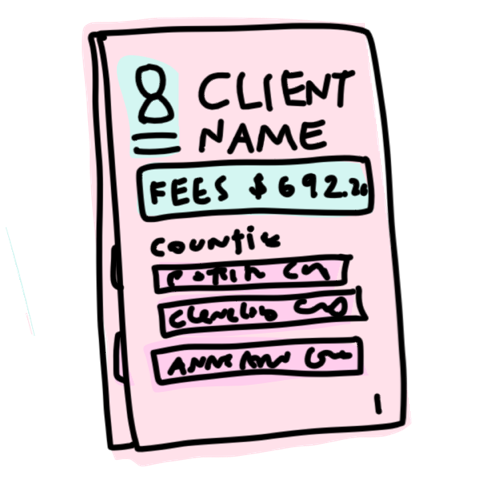
Most of the preparation time goes here, and so does the error that gets a filing rejected at the window. The worker is holding a complaint, a notice, and an intake form, and everything after it depends on what comes out of them.
What a good system does
Take the complaint, the notice, and the intake together, and say what is missing before the appointment starts.
Pull out the parties, the addresses, the case number, the date of service, the rent demanded, and the kind of notice, and show where each one came from in the document.
Check what it pulled against the complaint, because a name or a case number that does not match is enough for a clerk to reject the filing.
Read the notice for the defects that show on its face, such as the days it gives and the amount it demands.
Say what it could not read.
What it must never do
Fill a field it could not find with a plausible value.
What is usually missing from what you have in front of you?
Answer this
Part 2
Working out which rules cover the unit
Coverage decides whole blocks of the defense list at once, and the answer comes from the address and the public records rather than from the tenant, who often does not know.
What a good system does
Resolve the address to the local rules that cover the unit, including rent stabilization, just cause, and the state protections that apply where the local ones do not.
Check whether the tenancy sits in a program with its own notice requirements, such as a subsidy or public housing.
Check who owns the property, and whether the entity bringing the case is registered and in good standing.
Show the record the flag rests on, so a worker can check it at a glance rather than look it up again.
Say when a registry had no answer, rather than reading silence as not covered.
What it must never do
Settle coverage from what the tenant remembers when a public record answers it.
What do the registries you check fail to answer?
Answer this
Part 3
Narrowing the defense list before the interview
The defense attachment runs to 22 pages of checkboxes in one county, each with its own statute, and the guide beside it runs to 9. Walking in with that list already cut to the topics this case can support is the whole point of the work.
What a good system does
Hold the defense list as data, with the statute for each item, the facts that decide it, and where those facts come from.
Cut the list to the topics this case can support, and say why each topic is in or out.
Keep the items ruled out by coverage apart from the items that only need a question answered.
Show the fact behind every decision, so the worker can confirm it rather than redo it.
Keep the whole list reachable, because a short list that hides a defense is worse than a long one.
What it must never do
Rule a defense out on a field that is empty, since empty means nobody asked.
Which defenses get missed when time is short?
Answer this
Part 4
The interview with the tenant
The interview is the scarce part of the appointment. Every question the documents already answered is a question that takes time away from the facts only the tenant holds.
What a good system does
Ask only what the documents and the registries could not answer.
Use the guidance the office already wrote for each topic, in the words it already uses with tenants.
Explain a term before asking the question that turns on it, because waiver and estoppel mean nothing to somebody who has not been to law school.
Let the worker skip a question, go back, change an answer, and jump to the topic the tenant has just raised.
Keep the tenant’s own words where the defense turns on their account.
Keep what is still unanswered in view throughout.
What it must never do
Put a legal conclusion in the tenant’s mouth.
What do you ask that this list leaves out?
Answer this
Part 5
Choosing how to answer the complaint
Before any defense is pleaded, somebody decides whether to deny the complaint generally or paragraph by paragraph, and the amount the landlord demands decides which of those is open.
What a good system does
Put the choice between a general denial and a specific denial in front of the worker, with what each one requires and when each is available.
Where the denial is specific, list the paragraphs to deny and the ones to answer by saying the tenant does not know, and say in plain words what each paragraph is about.
Carry forward the discrepancies found in the papers, such as a misspelled name or a move-in date that does not match.
Produce the correction the court expects where the tenant was sued under a name that is not theirs.
How does your court treat a general denial?
Answer this
Part 6
Filling the answer and the defense attachment
The form and its attachment are where the work becomes a filing. A checked box with no facts behind it is as much of a problem as a defense nobody checked.
What a good system does
Fill the form from what was already collected, and ask the worker to confirm each field rather than accepting it in silence.
Check the defenses the facts support, and attach the statement of facts the form requires for each one.
Keep a place for the concern no box covers, in the words the tenant used.
Keep the page count on the form true to what is attached.
Produce the documents together, so nothing is filed without the attachment it refers to.
What it must never do
Check a box the facts do not support, or leave a checked box with nothing behind it.
What gets an answer rejected at the window in your court?
Answer this
Part 7
Preparing the fee waiver
The fee waiver is quiet until it fails, and then it takes the answer with it. A tenant whose waiver is refused and who does not pay has no answer on file.
What a good system does
Ask the questions in the order the form asks them, starting with the benefits that qualify a person on their own.
Work the household income against the amount the form allows, and move to the hardship route when the income is over it.
Carry the household and the monthly costs the hardship route asks for.
Say plainly what happens next, which is a decision on the spot for the first two routes and a wait of several days for the third.
Warn that an unpaid fee after a refused waiver undoes the answer.
What trips people up on the fee waiver where you are?
Answer this
Part 8
The jury demand
A jury demand cannot be added once the answer is filed, so it is decided in the appointment or not at all. It can be given up at any time afterwards.
What a good system does
Ask whether the tenant wants a jury, and say that it costs the other side money, that it lengthens the case, and that it can bring the other side to a settlement.
Say that the demand can be dropped later and cannot be added later.
Prepare the second fee waiver the jury fee needs, carrying over whether the first one was granted and when.
Leave the decision with the tenant.
What do you tell a tenant who asks about a jury?
Answer this
Part 9
Writing the summary for the reviewing attorney
The attorney reads the summary before the packet, and what they see in the first few lines decides how the case gets handled and whether it gets referred for full representation.
What a good system does
Write the summary from the case rather than from a blank page, covering where the unit is, how long the tenancy has run, what covers it, what kind of case it is, the rent and when it was last accepted, and the vulnerabilities that matter.
Say which referral route the case fits, including the case that misses the criteria and still deserves a second look.
Keep the detail in the file and out of the summary.
What does your reviewing attorney need in the first 3 lines?
Answer this
Part 10
Checking the packet before it goes for review
An office that files errors spends its next hours fixing them, and the fixes land on the tenant. The checks below are the ones a self help center already asks its workers to run.
What a good system does
Check the party names against the complaint, exactly as they appear there.
Check the address with its zip code, the case number, and the address for proof of service.
Check that every box selected has its follow-on option selected, and that nothing was checked by accident.
Check that documents prepared for one person were updated for the other, where more than one person is answering.
Open every attachment before it is sent, rather than trusting the file name.
What it must never do
Send a packet for review without the summary that explains it.
What do you catch most often at this stage?
Answer this
Part 11
Attorney review, filing, and what the tenant leaves with
The center helps with forms and information, and the legal judgment belongs to the reviewing attorney. Nothing reaches a court until a person has approved it.
What a good system does
Require the attorney’s approval before anything is filed.
Record what the attorney changed, so the pattern can be read later.
Produce the copies the court, the other side, and the tenant each need, with the proof of service.
Tell the tenant what happens next, including that the court writes by mail, that discovery may arrive, and what being late at the courthouse costs.
Say plainly that the service is help with forms and information rather than legal advice.
What it must never do
File anything itself, or let a packet reach a court that nobody approved.
What happens in your office between approval and the filing window?
Answer this
Part 12
Knowing whether it works
An earlier build of this produced a convincing demonstration and an output no worker could rely on. The difference showed up field by field rather than in an average.
What a good system does
Score each extracted field on its own against the document it came from.
Treat a missed coverage flag or a wrong date of service as a failed case rather than a lower average.
Measure the preparation time against what the appointment takes by hand today.
Count what the reviewing attorney corrects, and feed the pattern back into the defense list.
Ask the worker whether they trusted the output, because a worker who checks everything again has saved nothing.
What would you need to see before you let this near a real appointment?
Answer this
What happens to what you write
Every note comes to the Commons team. We read it, correct what this list gets wrong, and publish a new version saying what changed. The questions that need practitioners to argue them out go to the cohort for this area, which writes the detailed specification from what comes back.
A note about one line is as useful as a note that adds a whole step. If what you know is how your court treats a general denial, write about that.
The two agendas for this workflow
You are reading this one
Step-by-step agenda
This is the first round, and it collects what the people who do this work say a tool has to do, in the order the work happens and in plain words. Read it to argue with it, to correct it, and to say what your jurisdiction needs.
Not written yet
Functional agenda
The cohort writes the detailed specification after this round, using the answers that come back from this page. It numbers every capability, states the standard each one has to meet, and sorts them by the scope of the system being built, so a builder can build against it and an evaluator can test against it.