Housing
Mask an eviction record
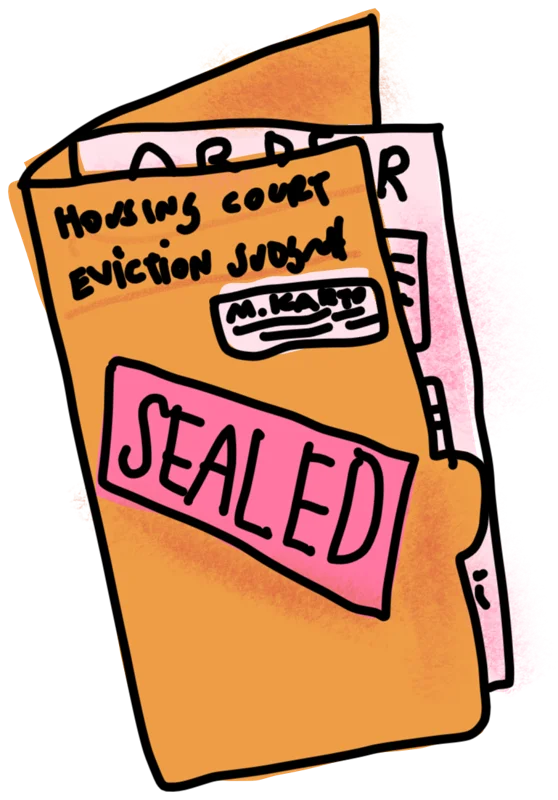
An old eviction case keeps costing Jordan apartments.
Jordan. Jordan has been turned down for several apartments this year. Each landlord points to a tenant screening report that shows an eviction case from four years ago, a case that ended in a settlement with no money owed.
- Legal outcome they want
- The old case is sealed, and screening companies stop reporting it.
- Life outcome they want
- Jordan can rent a stable home near work and family.
The problem
People with an old eviction case can keep paying for it years later. Tenant screening reports can list the filing itself, whether the case ended in a judgment, a settlement, or a dismissal. A landlord reads the report and rejects the application, sometimes without saying why, and the person pays another application fee at the next place. People may not know which report caused the denial, or that the old case is the reason.
The legal outcome
The legal outcome is a court order that seals or masks the old case, followed by corrected reports from the screening companies that already carry it. Depending on the state, a case may qualify because it was dismissed, settled, resolved in the tenant's favor, or old enough. Reaching that outcome means finding the case, learning whether it qualifies, filing the right request, and then following the record into each screening company's files, since a court order does not reach those companies on its own.
The life outcome
The life outcome is the ability to rent a stable home near work, school, and family. A masked record lets people apply for housing on the strength of their current circumstances. How could people who qualify for relief learn that they qualify, and how could that relief reach every place the record lives?
One story of how this service works today
Where this story ends todayThe record stays on most screening reports, even after a court seals the case.
- Specialized techA screening report flags the old case
- The personGets a denial letter citing the report
- Off-the-shelf techSearches online for how to remove an eviction
- Non-expert helperLibrary staff help find the court record
- Expert helperA legal aid clinic says it may qualify for sealing
- The personFiles a sealing request and disputes one report
Where people drop offMost people never learn that relief exists, and few follow up with every screening company.
A dashed step is one where people drop out of this story.
This is one story of how the service works today. It is a draft written for people to react to and change, and another place will look different.