Housing
Set aside a default
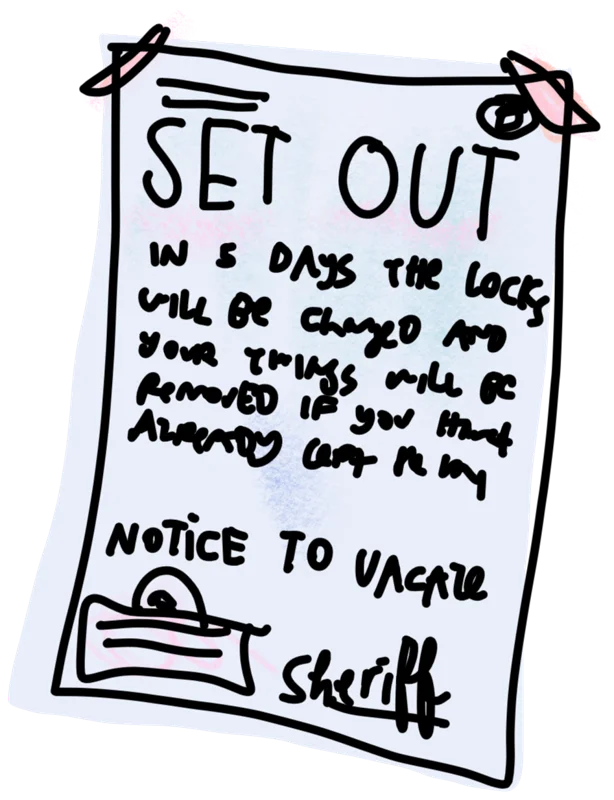
Priya never got the court papers, and a lockout notice is already on her door.
Priya. Priya never received the court papers, because they went to an old address. She learned about the case when a lockout notice was taped to her door, saying the sheriff will come within days. A default judgment has already been entered against her.
- Legal outcome they want
- The default judgment is vacated and the lockout is stopped.
- Life outcome they want
- Priya is not forced out overnight. The wrong judgment comes off her record.
The problem
People who learn about an eviction case only after a default judgment are already behind. The papers may have gone to an old address, been left with someone else, or never been served correctly. By the time the person sees a lockout notice, a judgment exists and a sheriff's date may be set for the coming days. The person has to act quickly in a case they did not know existed.
The legal outcome
The legal outcome is a court order that vacates the default and stays the lockout, so the case reopens and the person can raise their defenses. A motion to set aside usually depends on showing why the person did not respond, such as improper service, and that they have a defense worth hearing. Timing matters too, because the stay has to be in place before the lockout happens. People have to find the right motion, gather proof about how they were served, and get the court to act within the days they have left.
The life outcome
The life outcome is avoiding a sudden forced move and the losses that come with one: belongings left behind, missed work, children pulled from school, and a judgment on the record that the person never had a chance to contest. Even when people end up leaving, a vacated default lets them leave on fair terms and without that record. Where along the chain from service to lockout could people learn about their case earlier, and how much faster could they reach a stay once they do?
One story of how this service works today
Where this story ends todaySome people file a motion, often after the sheriff has already come.
- Community, family, or navigatorA neighbor sees the lockout notice on her door
- Off-the-shelf techSearches online for how to stop a lockout
- Non-expert helperThe clerk says the case is closed by default
- Non-expert helperThe self-help center gives her the set-aside form
- Expert helperA hotline attorney explains the grounds by phone
- Specialized techFiles the motion and stay request by e-filing
Where people drop offMany people learn too late, and many motions are filed without proof of the improper service.
A dashed step is one where people drop out of this story.
This is one story of how the service works today. It is a draft written for people to react to and change, and another place will look different.