Housing
Respond to an eviction case
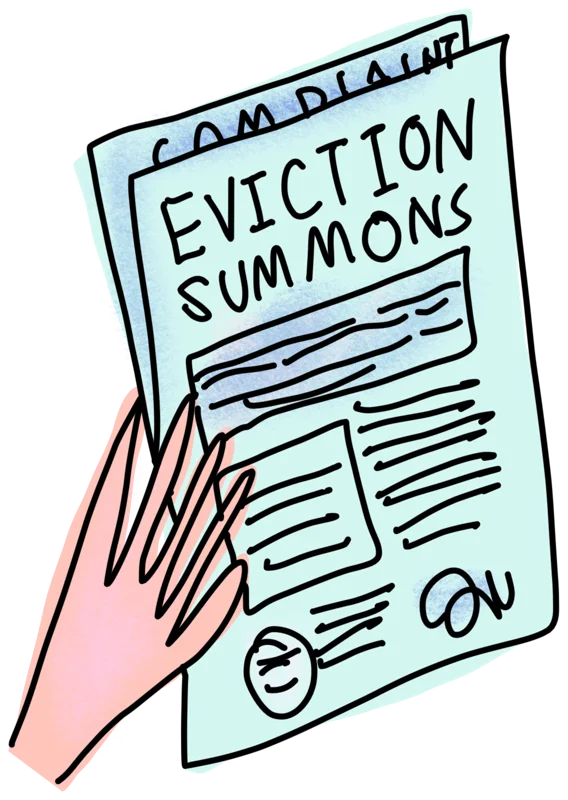
Dana has days to respond to eviction papers and does not know what her court expects.
Dana. Dana was served with eviction papers on a Thursday, two months after her hours were cut and she fell behind on rent. The papers give her only a few days to act. She does not know whether her court expects a written answer, an appearance at a first hearing, or neither, and she does not know what she could say or what she wants from the case.
- Legal outcome they want
- Dana responds on time, with the defenses that fit her case.
- Life outcome they want
- Dana keeps her home. Her job and her children's school stay steady.
The problem
People served with an eviction summons and complaint often have only days to act, and the papers arrive in the middle of whatever caused the rent to fall behind: a cut in hours, a medical bill, or a late paycheck. What the court expects next depends on where they live. In some courts the person must file a written answer by a deadline, in others they must appear at a first hearing, and in others neither is required before the trial date. The papers rarely explain in plain words which of these applies, and people can read them as a final order to leave or set them aside until they find time to understand them.
The legal outcome
The legal outcome that matters is a timely response in whatever form the court requires, backed by a strategy that fits the person's facts and goals. That can mean filing an answer that raises the defenses that apply, appearing on the right day ready to state those defenses, or preparing for a trial or a negotiation with the landlord. Defenses can include problems with the notice, the condition of the home, the amount claimed, retaliation, or protections specific to that city or state. Reaching that outcome requires people to learn what their court requires and by when, decide what they want from the case, and get ready to present their side.
The life outcome
The outcome that matters in people's lives is housing stability. That can mean keeping the home, or leaving on a timeline the household chooses, without an eviction judgment that follows them to the next rental application. Children stay in their school, adults keep their jobs, and families avoid the shelter stays and debts that can follow a forced move. What would it take for every person with an eviction case to understand what their court requires, choose a strategy, and arrive prepared, and how could courts, legal aid groups, and communities share the work of getting them there?
One story of how this service works today
Where this story ends todaySome people file an answer on time, often without the defenses that matter.
- Off-the-shelf techSearches online and finds other states' rules
- Community, family, or navigatorHer sister says to call legal aid
- Non-expert helperLegal aid intake screens her by phone
- Expert helperAn attorney gives brief advice if it is a priority case
- Specialized techFills a guided interview on the court website
- The personPrints, signs, and files at the clerk's window
Where people drop offMany people wait for a callback past the deadline, and many file without the defenses that apply to them.
A dashed step is one where people drop out of this story.
This is one story of how the service works today. It is a draft written for people to react to and change, and another place will look different.