Debt collection
Reach a fair settlement
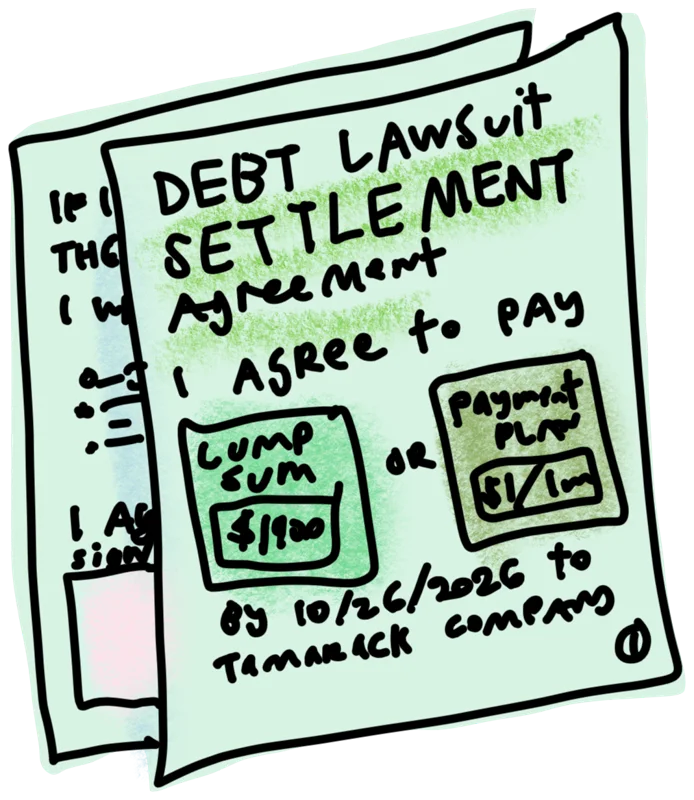
A collector gave Owen until Friday to accept a payment he cannot meet.
Owen. Owen owes on an old auto loan and wants to settle. The collector's lawyer called with an offer that he must accept by Friday. It sets a monthly payment he cannot meet and uses terms he does not understand, and he worries that saying no will make things worse.
- Legal outcome they want
- Owen signs a written settlement he can afford that ends the case.
- Life outcome they want
- Owen can plan his money again. The case stops hanging over his job.
The problem
People who want to settle a debt often negotiate with a collector's attorney who handles these cases every day. Offers can come by phone or email with short deadlines, and they may set payments the person cannot keep up with. An agreement may include terms such as a judgment that takes effect if a payment is missed, which people may not recognize or understand. People can sign out of relief that the case will finally end.
The legal outcome
The legal outcome is a written settlement or payment plan the person can afford, with clear terms that end the case and stop further collection. A fair agreement reflects what the collector could actually prove, accounts for the person's income and protected funds, and spells out what happens if a payment is late. It should also lead to a dismissal or a satisfaction of judgment that shows on the record.
The life outcome
The life outcome is a household that can plan its money again, without a case hanging over the person's job, credit, and family. Agreements that people can keep end the cycle of default and new collection. How could people understand an offer before they accept it, and what should a fair agreement look like for both sides?
One story of how this service works today
Where this story ends todayMany settlements break down, and the case returns as a judgment.
- Off-the-shelf techThe collector's lawyer calls and emails an offer
- Community, family, or navigatorHis spouse urges him to sign and be done
- Off-the-shelf techSearches online for whether the offer is fair
- Non-expert helperA credit counselor reviews his budget
- Expert helperA hotline attorney explains the terms in a short call
- Specialized techSigns the agreement through an e-signature link
Where people drop offPeople sign before anyone reviews the terms, and many agreements set payments they cannot keep.
A dashed step is one where people drop out of this story.
This is one story of how the service works today. It is a draft written for people to react to and change, and another place will look different.