Debt collection
Stop a wage garnishment
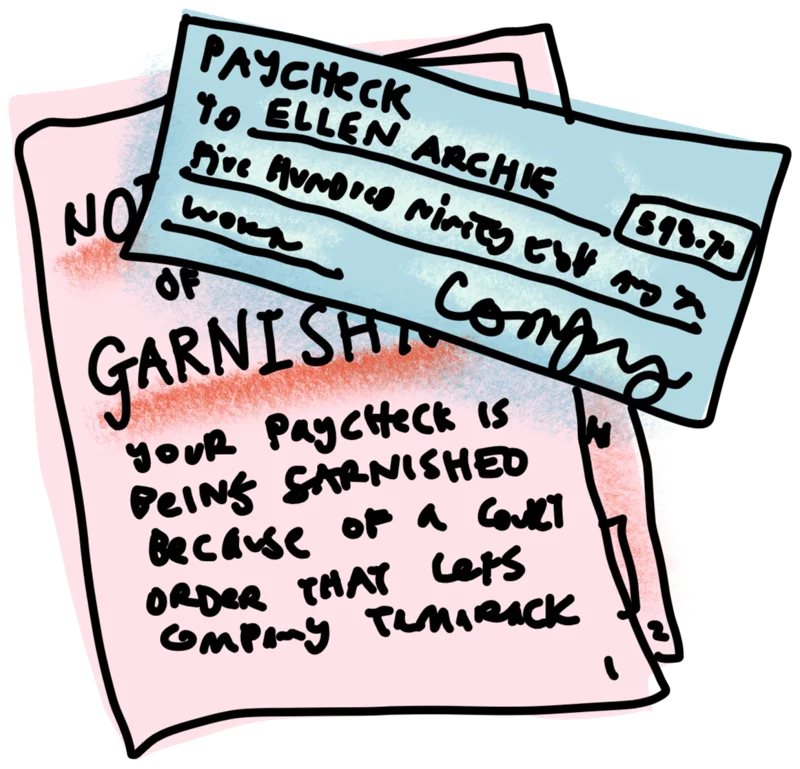
Nadia learned about a judgment when her paycheck came up short.
Nadia. Nadia found out about a judgment against her when her paycheck came in a quarter short. She is a home health aide supporting two kids, and the garnishment means she cannot cover rent this month. She does not know that some of her wages may be protected.
- Legal outcome they want
- Nadia claims her exemption, and the court reduces or stops the garnishment.
- Life outcome they want
- Nadia keeps enough of her paycheck to pay rent and care for her children.
The problem
People often learn about a judgment when their paycheck comes in short. The judgment may come from a case they never knew about or did not answer. The garnishment takes a share of each paycheck until the debt is paid, and for workers earning low wages that share can decide whether the rent gets paid this month.
The legal outcome
The legal outcome is a successful claim of exemption, so the court reduces or stops the garnishment and protects the income the person needs to live. Federal and state law protect certain wages and benefits, and some states protect more for people supporting a household. Claiming the exemption usually requires filing within a short window, with proof of income and expenses. Where the judgment itself was flawed, the outcome can also include setting it aside.
The life outcome
The life outcome is a paycheck that covers rent, food, and care for the household. A garnishment can push people into late fees, high-cost loans, and lost housing, so protecting income protects much more than one bill. How could people learn about their protections at the moment their wages are taken, and how quickly could those protections take effect?
One story of how this service works today
Where this story ends todayThe garnishment continues for most people, even when part of their wages is protected.
- Specialized techThe payroll system deducts the garnishment
- Non-expert helperHer employer's HR office explains the order
- Off-the-shelf techSearches online for how to stop garnishment
- Community, family, or navigatorA community center caseworker refers her to legal aid
- Expert helperA legal aid attorney checks exemptions on a callback
- The personFiles the exemption claim after the deadline
Where people drop offThe exemption deadline is short, and many people learn about it after it has passed.
A dashed step is one where people drop out of this story.
This is one story of how the service works today. It is a draft written for people to react to and change, and another place will look different.