What happens here, how different people use it, and what you can expect when you get involved.
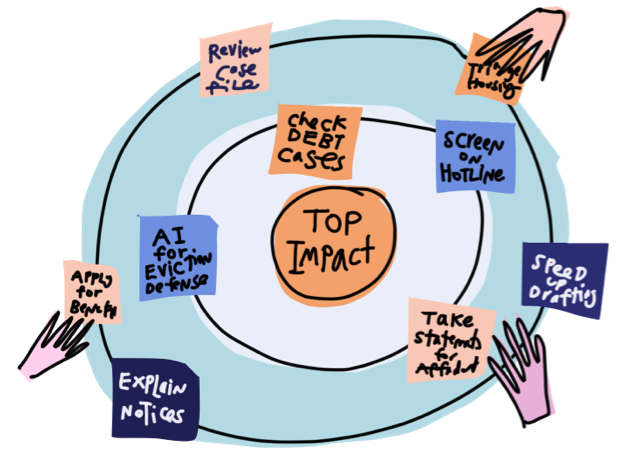
Practitioner and community cohorts define exactly what AI tools should exist and what quality they must meet. The people closest to the problems set the agenda.
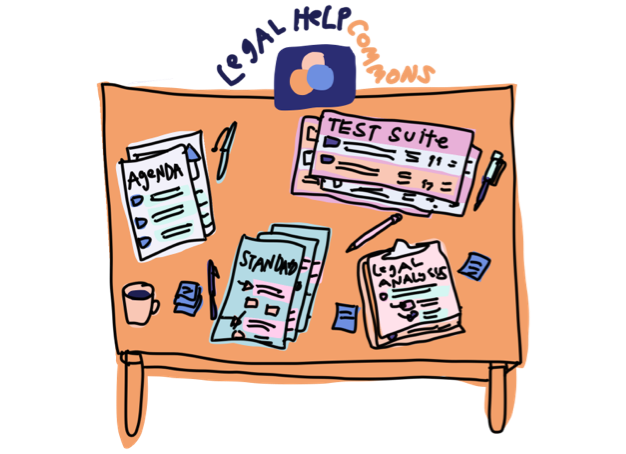
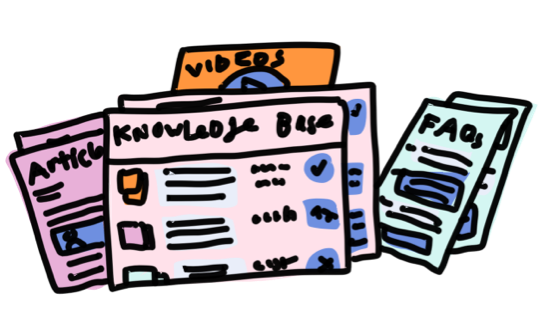
For each priority tool, the Commons produces the functional agenda, the conformance standards, the test data, the technical blueprint, and the implementation guide.
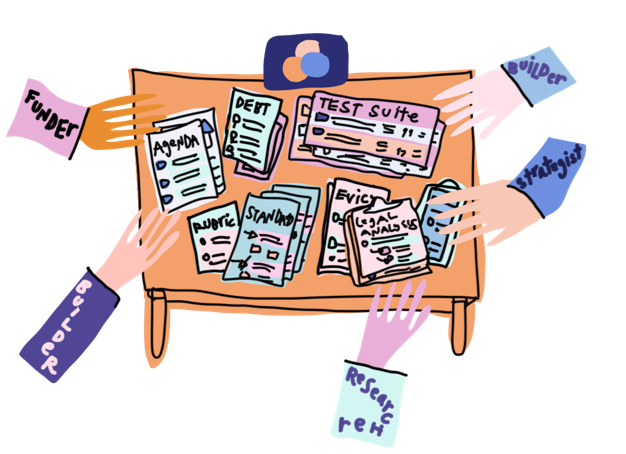
Builders get scoped problems with ready infrastructure. Funders get quality standards for smarter investment. Organizations get packages they can adopt without starting from scratch.
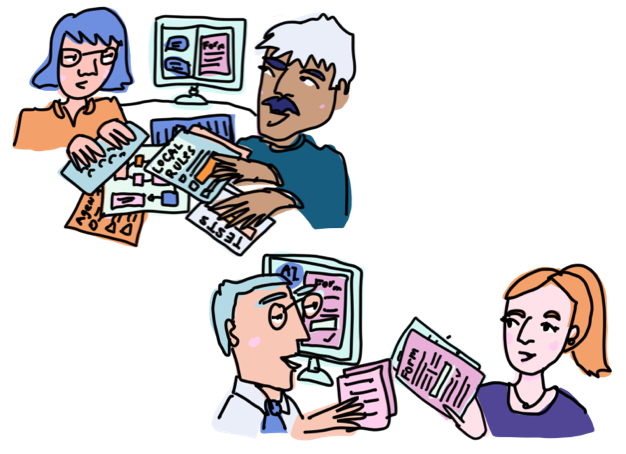
Organizations take the guidance to build their own AI workflows for their jurisdiction and their population. They serve more people, more efficiently, with tools designed for their setting.
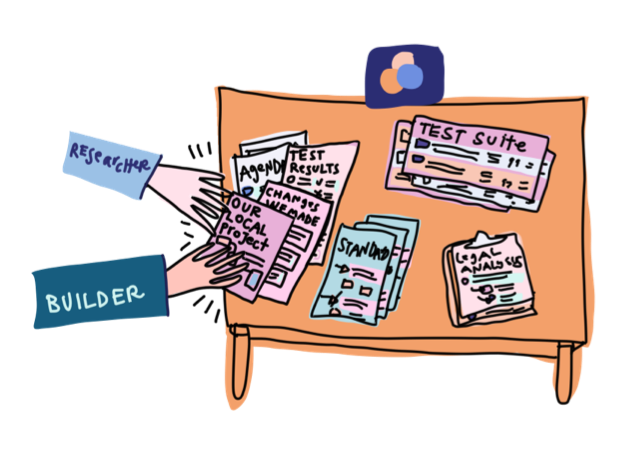
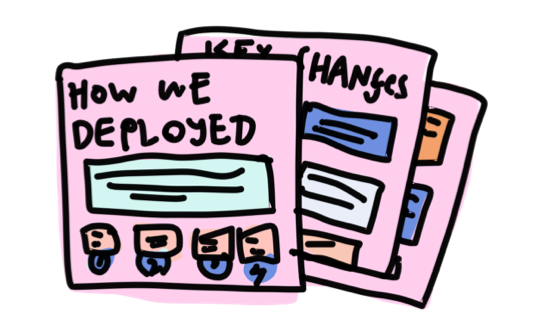
Teams contribute their lessons learned, technical innovations, design refinements, test results, and test suites back to the Commons for others to build from.
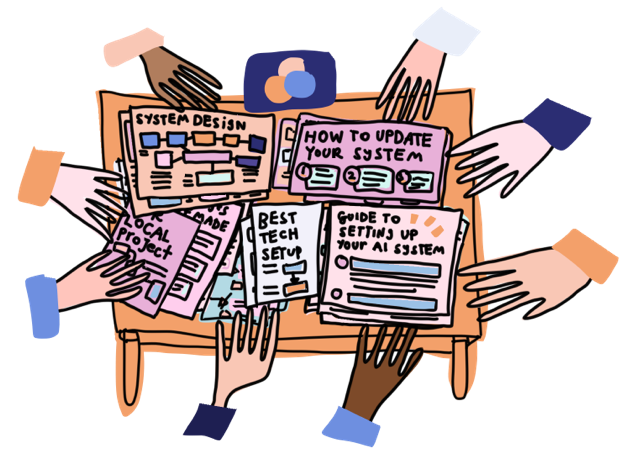
As AI models change and work evolves, the community is connected by a common spine of technology and standards. Teams modernize and improve alongside each other instead of alone.

Join a cohort, help define what tools your clients need, and be the first to test them. Your experience with real cases is what keeps the agenda grounded in what actually helps.
Pick up a scoped challenge with specs, data, evaluation standards, and a pilot partner ready to go. You do not need to know the law. The functional agenda tells you what to build.
Access benchmark datasets and evaluation protocols for legal help AI. Run audits, publish findings, and contribute to a field that needs independent measurement.
Use the functional agendas and conformance standards to set procurement requirements, evaluate vendor proposals, and make informed decisions about technology investments.
Use the Commons quality standards to evaluate proposals and invest in tools that meet a real bar. The conformance standards give you something concrete to put in an RFP.
Help set the agenda and the standards. Reflect on what kinds of workflows would most help the people you serve. Your perspective keeps this work accountable to the people it is supposed to help.
She built an internal AI tool at her organization. It works pretty well, but she has never formally evaluated it and nobody else knows about it. She finds the Commons through recommendations from others in her network.
The Commons lets her evaluate her tool against published standards. She can also have her project documented as reference architecture, packaged so other organizations can consider and possibly adopt it. She goes from isolated builder to active partner whose work benefits the whole field.
He has $400K for AI-related legal aid technology grants. He has received vendor proposals and grantee requests and cannot tell which ones are good. He finds the Commons conformance standards through his professional network.
He adds the standards to his next grant RFP. He can evaluate proposals against a real, clear quality bar instead of guessing which ones will be feasible and safe. The conformance levels tell him what to require and what to look for. He can ask key followup questions to vendors during demos and set up technology standards into the agreements.
She spent years building government technology. She is exploring legal help but does not know the law, does not know any legal aid attorneys, and does not know where to start.
She finds a Commons workflow page that has the functional agenda, the conformance standards, the test suite, and the reference architecture. She starts building within a week. The spec tells her what the tool should do. The test suite tells her whether it is working. The reference architecture shows her one way to build it.
Her presiding judge told her to "look into AI." She has a two-person IT team and no AI experience. She reads a Commons implementation case study from another court her size.
She sees the vendor-independent integration path works with her existing case management system. She follows the playbook with her small team, and reaching out to other groups who have also built out this system. She has a working system deployed within months, without having to figure everything out from scratch.
She does home visits with patients. They mention eviction threats, wage garnishment, court letters they do not understand. She has nothing to offer except the recommendation to "call legal aid."
She finds a Commons tool designed for non-lawyer operators. She shares it with a legal aid group locally, who works with their internal IT staff to build a local version of this tool for her and other justice partners to use. She can do a first-level legal screening during a home visit and connect her patient to help that afternoon. The tool tells her what to ask and what the answers mean.
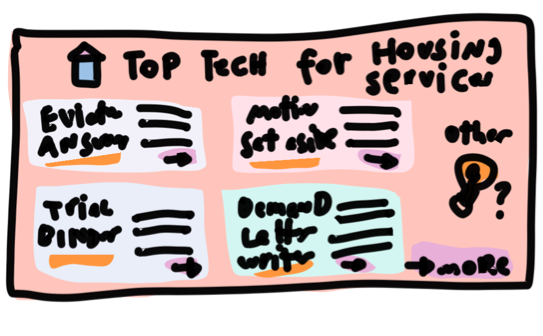
He has seen too many technology demos that do not hold up on real cases. He reads a Commons housing workflow page and sees the evaluation data: honest about what the tool can and cannot do.
He tries it on anonymized cases from his office. It catches defenses his intake team missed. He decides to greenlight a local implementation of this tool, because the trial run and evaluation data convinced him, not a sales pitch.
She is assigned to a four-week sprint on an eviction defense tool. The functional agenda tells her what the tool checks. The conformance standards tell her what "better" means.
She rebuilds the prompt architecture. Jurisdiction precision improves significantly. She produces a reference architecture document and performance data. The Commons gets a better blueprint. She gets a measurable contribution to the field.
She is enrolled in an AI audits course. Her project: audit a Commons tool using the published evaluation methodology. She runs test scenarios, scores the outputs, and writes a full audit report.
The Commons gets independent evaluation data. She gets a career-defining project and a publishable piece of work. The tool gets better because someone tested it who did not build it.
He finds a Commons project brief through his business school's social entrepreneurship center. The brief describes the tool, the market, and the open question: who pays for this?
He spends a summer building the business model. He might start a company. The Commons gave him a real problem with real constraints instead of a hypothetical case study.
The Legal Help Commons is a shared infrastructure initiative for legal help AI, run by the Stanford Legal Design Lab. Practitioner working groups define what AI tools should exist and what quality standards they should meet. The Commons packages that into functional agendas, conformance standards, reference architectures, test suites, and implementation guides that any team can use.
The Stanford Legal Design Lab convenes the process and maintains the infrastructure. The content is shaped by working groups of legal aid organizations, court teams, technology builders, researchers, and funders across the country.
Yes. All published standards, agendas, reference architectures, and guides are open for use. The courses are free for legal aid organizations and their partners.
Visit the Get Involved page and express interest in the group that matches your work. We will follow up about how to participate. Working groups are open to practitioners, builders, researchers, funders, and anyone who can contribute.
A functional agenda is a specification that defines what a legal help AI tool must be able to do, in very granular and clear step-by-steps. It lists every capability the tool needs, organized by task area, with each capability tagged by requirement level (required, extended, or aspirational). Builders use it to know what to build. Funders use it to know what to fund. Evaluators use it to know what to test.
Conformance standards define the quality bar a tool must clear. They specify what "good enough" looks like across performance, usability, safety, onboarding, and sustainability. A tool is tested against these standards before it should be deployed with real users.
JusticeBench is the discovery and evaluation platform for AI in the access to justice field. It catalogs who is building what, hosts evaluation datasets and benchmarks, and publishes conformance test results. The Commons builds the tools and standards. JusticeBench measures how well they work, and allow researchers, builders, and leaders to get into the details of evaluation resources and results. Visit justicebench.org to explore.
Yes. The functional agendas, conformance standards, and reference architectures are designed to be adopted by anyone. Build to the spec of the agenda, test against the standards, and publish your conformance results on JusticeBench. The Commons does not approve or rank products. It publishes the spec and the test. You demonstrate the results, and can share them with others on JusticeBench
As more workflow packages are published, you will be able to use the resources to test your tool. Download the test suite for the relevant workflow, run the scenarios through your system, score the results using the rubric, and submit the results. The evaluation methodology is published and open. You can run it yourself or have an independent evaluator run it. Results are published on JusticeBench.